
On 13 April 2026, humanitarian partners and government representatives gathered in Kathmandu, Nepal, for a SEADS Outreach Event convened by the Food and Agriculture Organization of the United Nations (FAO).
The event followed the first Asia-based SEADS Training of Trainers (ToT), held from 6-11 April, which brought together practitioners from seven countries and trained 15 new SEADS trainers. This marked a key step in strengthening responses to crop-related crises across the Asia-Pacific region.
Bringing together government officials, UN agencies, humanitarian partners and academia, the outreach event provided a platform to share learning from the training and explore how SEADS can be integrated into Nepal’s national systems, policies and programmes.
From principles to practice
A central focus of the event was how SEADS standards can be translated into practical, field-level action.
Prachanda Kattel, a SEADS Trainer from CRS Nepal, highlighted the value of the standards in supporting clear, evidence-based decision-making, linking farm-level realities with policy and response processes. SEADS, he noted, provides a structured, practical tool to determine when and how crop-related interventions should be implemented, helping ensure that responses strengthen local systems rather than disrupt them.
A shared global framework
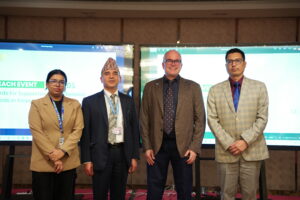
From a global perspective, FAO’s Shawn McGuire underscored the significance of the milestone. “Humanitarian principles, such as the right to food and dignity, are threaded through SEADS, but it links these principles to clear, technically useful guidance,” he said. “Crop production produces 80% of the food we eat and is essential to the livelihoods of millions of people. Yet, before SEADS was developed, there had not been any humanitarian standards for supporting crop-based livelihoods in emergencies. So SEADS fills a crucial gap for humanitarian agencies, donors and governments. SEADS helps practitioners to assess the needs in cropping systems after a crisis and devise the most appropriate responses.”
Shawn also emphasized that the Nepal training was the first SEADS ToT in Asia and only the second globally, highlighting the importance of a shared framework to improve coordination and effectiveness across agencies while allowing adaptation to local contexts.
Voices from the field
Newly trained SEADS practitioners shared how they plan to apply and scale the standards in their work.
Krishna Mohan, from CRS India, noted that SEADS “brings together knowledge that was previously scattered into one clear and structured framework,” supporting stronger analysis and coordination.
Anju Jha, from the Nepali NGO Mandwi, emphasized SEADS’ role in shaping more effective responses, highlighting decisions “that go beyond simply distributing seeds and focus on restoring livelihoods.”
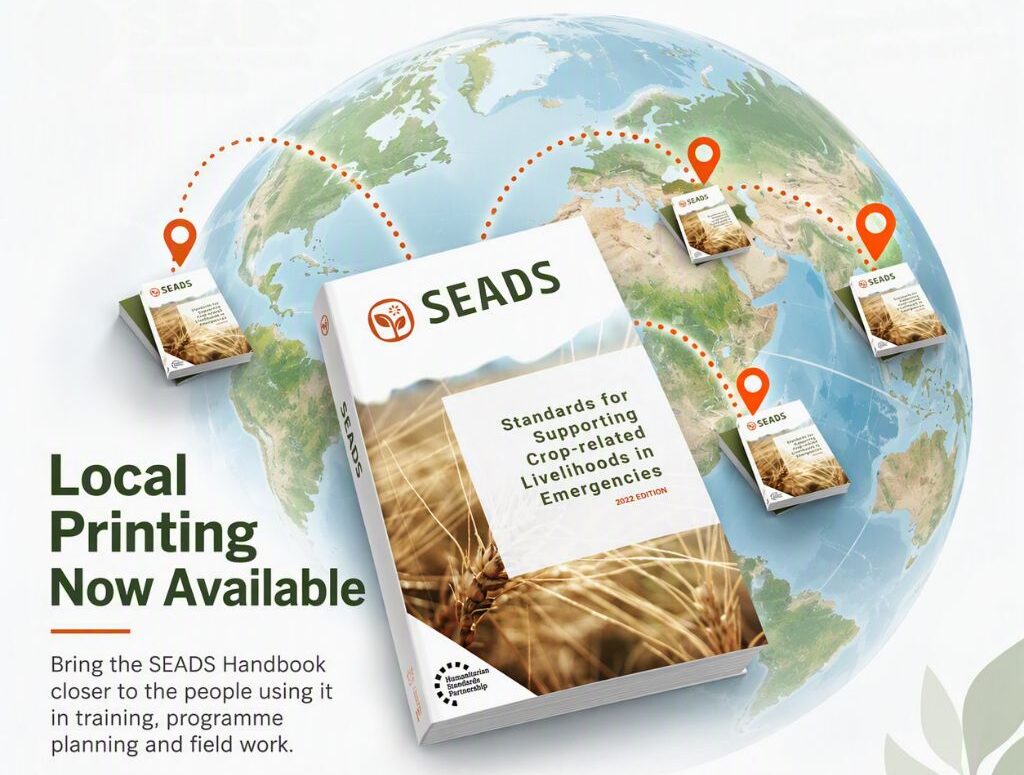
Participants also stressed the importance of localising SEADS – through translating materials, strengthening collaboration across institutions, and embedding the standards within national systems, training, and education.
Strengthening policy and practice
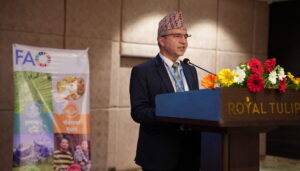
Speakers highlighted the need for agricultural emergency responses that go beyond speed alone, focusing on evidence-based, context-specific and risk-informed approaches that support both immediate recovery and long-term resilience.
Arun GC, Assistant FAO Representative, pointed to the growing risks facing crop-based livelihoods due to climate change and other pressures, and reaffirmed FAO’s commitment to aligning its work with global standards such as SEADS.
Closing the event, Jagannath Tiwari, Joint Secretary at Nepal’s Ministry of Agriculture and Livestock Development (MoALD), described SEADS as an important milestone in strengthening national capacity to respond to agricultural crises and emphasized the importance of collective action to build resilient agrifood systems.
Looking ahead
With strong interest from governments and partners, the focus now shifts to scaling training, localising tools, and embedding SEADS into policy and practice across the region, supported by growing national and organisational uptake.